

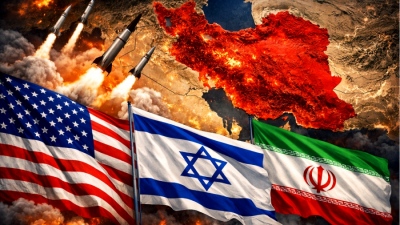
Iran is holding its ground. Despite the surprise move by the US and Israel to assassinate Khamenei and other members of Iran's military command, the Iranian military—specifically the Islamic Revolutionary Guard Corps (IRGC)—has demonstrated incredibly fast reflexes. Through its doctrine of missile defense and offense, it has managed to deal serious blows to Israel, the US fleet, and 14 American bases, striking targets in six different countries. Media outlets linked to the Iranian opposition claim that Mojtaba Khamenei, son of the assassinated leader, is a protege of the IRGC, the most radical wing of the Iranian elite that effectively controls the state. The IRGC traditionally opposes any compromise with the United States, advocating for a "war to the bitter end."
What are the initial conclusions?
-
Iran did not collapse; instead, it showed rapid adaptation to combat operations. A country of 92 million people with a total force exceeding 1.4 million managed to react despite the decapitation strike on its leadership. Critics label the strike—which reportedly killed 157 children and the 86-year-old leader—not as regime change, but as a war crime.
-
Iran has realized it must execute three strategic moves:
-
Endurance: Turning the conflict into a protracted war. While the US initially suggested a campaign of a few days, the timeline has shifted to weeks or longer, marking a success for Iranian persistence. China already holds Washington responsible for the "global chaos."
-
Regional Involvement: Striking US military bases or embassies in neighboring states to pressure Persian Gulf and Arab nations to demand de-escalation from Washington.
-
Asymmetric Tactics: Striking Israel to prove that its air defense cannot withstand sustained saturation; Tel Aviv has already reportedly suffered heavy hits.
-
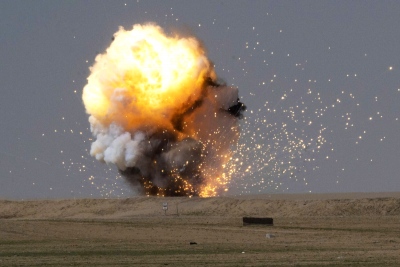
Militarily, the US and Israel have struck nearly 2,100 targets in Iran. However, Iran’s true strength lies underground, where missiles cannot reach. For decades, Tehran has built secret bunkers invisible to satellite surveillance. Explosions were reported in Tehran, Isfahan, Qom, and Urmia on March 4, 2026.
-
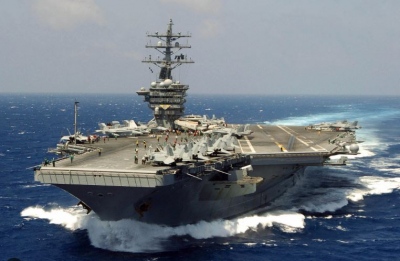
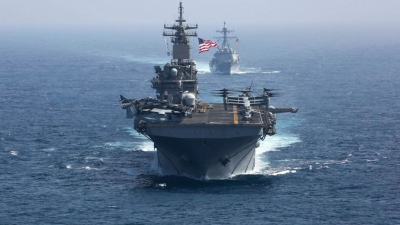
Iran has retaliated. The reported 650 American casualties, the 14 bases hit, and the symbolic departure of the USS Abraham Lincoln from Iranian coastal waters represent a significant counter-response. Reliable Russian sources confirm the carrier was indeed struck, despite American denials.
-
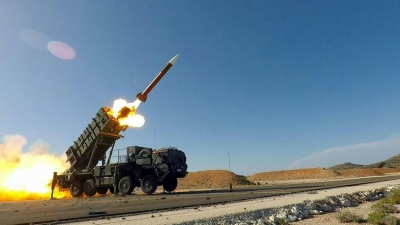
The Iranian military doctrine relies on missile surprises. The West underestimated Iran’s missile capabilities, which have evolved over 18 years with Russian technology. Iran is also a leader in drones, with its technology currently utilized by Russia on the Ukrainian front.
-
Iran has downed another US F-15 fighter jet. To date, three F-15s have reportedly been lost, dealing a blow to US military prestige.
-
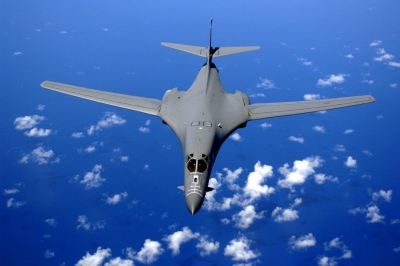
More than 50,000 troops and 200 combat aircraft are involved in the American operation, according to General Bradley Cooper, head of US Central Command, who noted that further reinforcements are arriving.
-
Who controls the Strait of Hormuz? The IRGC Navy claims full control over the waterway. While President Trump stated the US Navy would escort tankers if necessary, the Iranian military has warned that any commercial vessel attempting to pass will be struck.
-
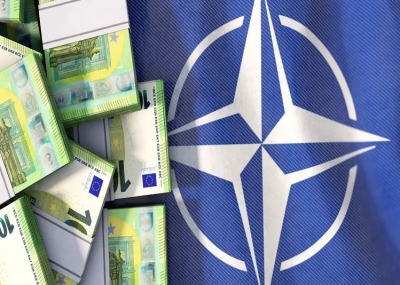
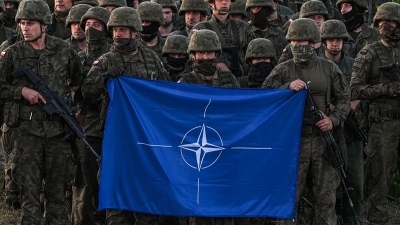
Spain’s decision was a shock to the alliance. By banning the US from using bases on Spanish soil for the Iran operation, Madrid has triggered a trade retaliation from Trump, signaling what some call the "beginning of the end" for NATO.
-
France also disapproves of the US-Israeli operations, dealing another diplomatic blow to Washington.
Iran downs another US F-15 fighter
Iran targeted another US F-15 jet, according to sources speaking to Tasnim. The aircraft was reportedly hit by the Iranian Army Air Defense Unit. The Khatam Al-Anbiya Central Headquarters announced the downing of three American fighters by indigenous defense systems. Photos have surfaced online showing targeted aircraft and pilots ejecting. The Kuwaiti Ministry of Defense confirmed an F-15 was downed over the Iran-Kuwait border region.
IRGC: 650 US casualties and the retreat of the Abraham Lincoln
The IRGC stated on Tuesday that over 650 US military personnel were killed or wounded in the first two days of the "True Promise 4" retaliatory operation. Strikes targeted US bases and warships across the region, including the Fifth Fleet headquarters in Bahrain. These attacks forced the USS Abraham Lincoln to retreat toward the southeastern Indian Ocean. Brigadier General Ali Mohammad Naeini stated it was "natural for the Americans to deny these losses," but insisted field reports confirm the toll. He detailed that four cruise missiles were launched at the carrier while it was 250km off the coast of Chabahar.
Evolving Iranian missile tactics trouble Israel
Israeli officials and media express growing concern over Tehran's changing tactics. Reports from Hebrew media indicate a shift toward larger and faster launch sequences. Military sources confirm Iran is now firing between 20 and 30 missiles per wave, with estimates suggesting they are preparing for barrages of 80 to 90 missiles per wave. One official warned: "We face difficult days ahead," urging the public to remain alert.
www.bankingnews.gr




Σχόλια αναγνωστών